
KEEPING FOOD FRESH
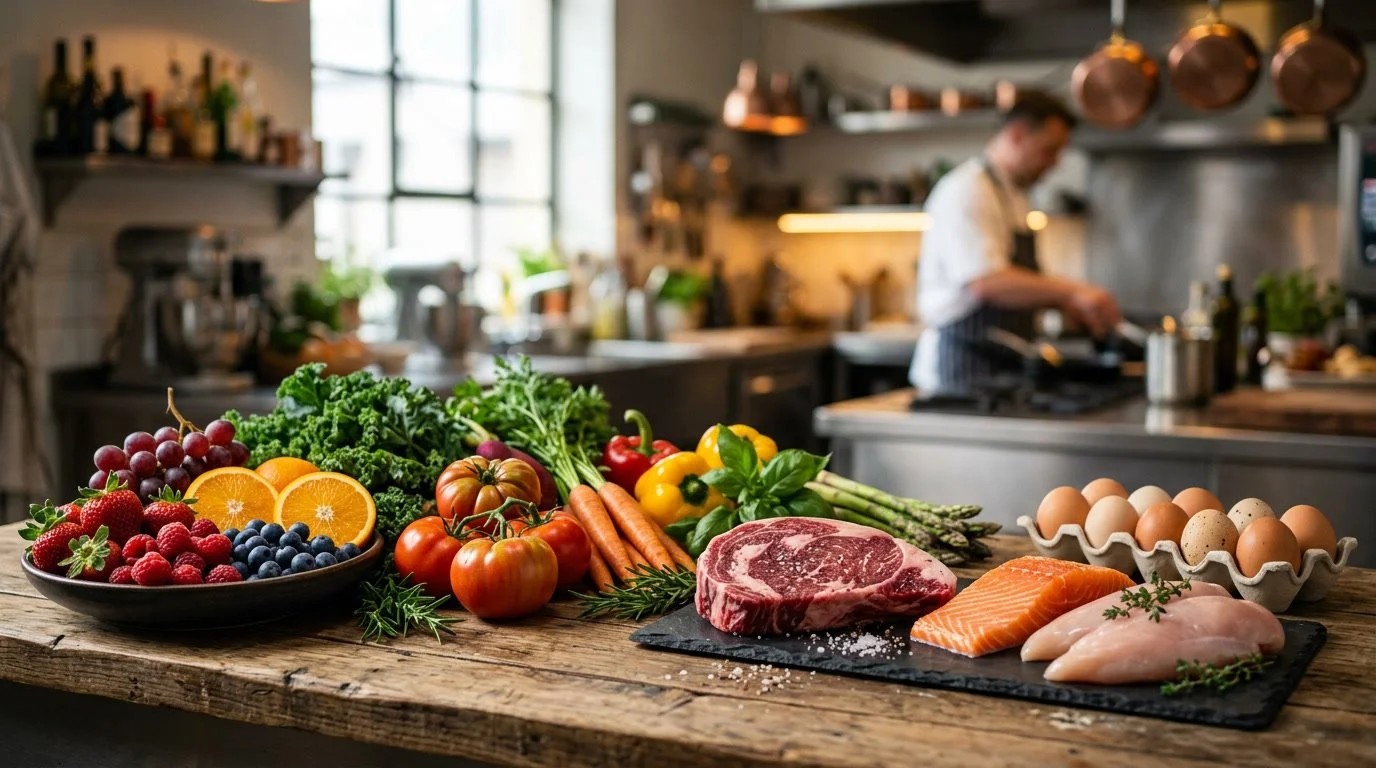
One of the most fundamental skills in any kitchen — professional or domestic — is knowing how to keep food fresh. It affects the quality of every dish you cook, the safety of every meal you serve, and the efficiency of every kitchen you work in. Food spoilage is not just a culinary inconvenience — it is a significant contributor to food waste, unnecessary cost, and in some cases, serious health risks. Understanding the science behind why food spoils, and the practical methods available to slow or prevent that spoilage, is knowledge that applies to every cook at every level.
Whether you are a home cook trying to make your weekly shop last longer, a culinary student learning the principles of food safety, or a professional chef managing a busy kitchen operation, this section gives you the knowledge to store, preserve, and extend the life of food with confidence, precision, and purpose.
Why Food Spoils — Understanding the Basics
Before exploring how to keep food fresh, it is important to understand why food spoils in the first place. Food deteriorates through four primary mechanisms, often working simultaneously.
Microbial Spoilage is the most significant cause of food spoilage and the one with the most serious safety implications. Bacteria, moulds, and yeasts are present in the environment, on food surfaces, and in the air around us. Given the right conditions — warmth, moisture, nutrients, and time — they multiply rapidly and break down food, producing off-flavours, off-odours, and in some cases dangerous toxins. The primary goal of most food preservation techniques is to deny microorganisms one or more of these conditions, thereby slowing or stopping their growth.
Enzymatic Activity refers to the natural chemical reactions that continue to occur in food after harvest or slaughter. Enzymes present in the food itself drive ripening, browning, and softening. The browning of a cut apple, the softening of a banana, and the tenderisation of hung meat are all examples of enzymatic activity. While some enzymatic activity is desirable — such as the ageing of beef — uncontrolled enzymatic reactions lead to deterioration in quality. Heat deactivates enzymes, which is why blanching vegetables before freezing is important — it stops enzymatic activity that would otherwise cause texture and colour changes even at freezer temperatures.
Oxidation occurs when food is exposed to oxygen in the air. Fats become rancid through oxidative reactions, cut fruits and vegetables turn brown, and vitamins degrade. Oxidation is accelerated by light, heat, and prolonged air exposure. Many preservation techniques — including vacuum sealing, modified atmosphere packaging, and the use of antioxidants — work specifically to limit oxidative spoilage.
Physical and Chemical Deterioration includes processes such as moisture loss — which causes wilting, drying, and textural changes — and moisture gain — which causes sogginess, caking, and microbial growth in dried products. Temperature fluctuations, physical damage, and the natural ageing processes of different food types all contribute to deterioration over time.
The Role of Additives in Modern Food
Food additives are substances added to food during processing or preparation for a specific technological purpose — to preserve freshness, improve texture, enhance flavour, maintain colour, or extend shelf life. They are one of the most misunderstood aspects of the modern food supply, simultaneously feared by some and completely overlooked by others.
In most countries, food additives must be approved by a regulatory body before they can be used in food production. In the European Union, approved additives are assigned an E number — a classification system that covers a wide range of substances including preservatives, antioxidants, emulsifiers, stabilisers, thickeners, gelling agents, flavour enhancers, colours, and sweeteners. The presence of an E number does not automatically indicate something harmful — many E numbers are derived from entirely natural sources. Vitamin C, for example, is classified as E300 when used as an antioxidant in food production.
Preservatives extend the shelf life of food by inhibiting the growth of bacteria, moulds, and yeasts. Common preservatives include sodium benzoate, used in soft drinks and condiments, and nitrates and nitrites, used in cured meats such as bacon and ham to prevent the growth of dangerous bacteria including Clostridium botulinum. Without preservatives, many foods would spoil far more rapidly, raising both food waste and food safety concerns.
Emulsifiers are used in food production for the same reason they are used in cooking — to combine ingredients that would not otherwise mix. Lecithin, derived from soya or sunflower, is one of the most widely used food emulsifiers, found in chocolate, margarine, and many baked goods. Mono and diglycerides of fatty acids are another common emulsifier, used to improve texture and extend shelf life in bread, ice cream, and confectionery.
Colours are added to food to restore colour lost during processing, to ensure consistency between batches, or to make food more visually appealing. Some colours are derived from natural sources — beetroot red, annatto from seeds of the achiote tree, and turmeric yellow are all natural food colours used widely in the food industry. Others are synthetic — and some synthetic colours, particularly certain azo dyes, have been linked to hyperactivity in children, leading to voluntary restrictions on their use in some markets.
Flavour Enhancers are substances that enhance the existing flavour of a food without contributing a significant flavour of their own. The most widely known is monosodium glutamate — MSG — which enhances savoury, umami flavours. Despite its somewhat controversial reputation in some consumer circles, MSG has been extensively studied and is considered safe by regulatory authorities worldwide. Glutamates occur naturally in many foods including tomatoes, parmesan cheese, soy sauce, and mushrooms — foods universally recognised for their depth of flavour.
Sweeteners are used to replace sugar in reduced calorie or sugar-free products. They fall into two categories — bulk sweeteners such as sorbitol and xylitol, which provide a similar volume to sugar with fewer calories, and intense sweeteners such as aspartame, saccharin, and stevia, which are many times sweeter than sugar and are used in very small quantities. The safety and long-term health effects of artificial sweeteners continue to be an active area of research and debate.
Understanding additives does not require memorising every E number. It requires developing a general awareness of why they are used, where they are typically found, and how to interpret their presence on an ingredients list with neither panic nor indifference.
How Freezing Affects Your Food
Freezing is one of the most widely used and most effective food preservation methods available, both at home and in professional kitchens. When food is frozen, the water within its cells turns to ice, dramatically slowing microbial activity and enzymatic reactions. At -18°C — the standard domestic and commercial freezer temperature — bacteria cannot multiply, and the quality of most foods can be maintained for weeks, months, or in some cases years.
However, freezing is not without its effects on food quality, and understanding these effects allows you to freeze more intelligently and get better results when you defrost and cook.
Ice Crystal Formation is the central issue in freezing food quality. When water freezes, it forms ice crystals. The size of these crystals matters enormously. Slow freezing — as occurs in a domestic freezer — allows large ice crystals to form, which can rupture cell walls and damage the cellular structure of food. When the food is thawed, the damaged cells release their moisture, resulting in a softer, wetter texture than the original. This is why previously frozen strawberries are soft and watery when thawed, why frozen courgette becomes limp, and why the texture of some frozen meats is slightly different from fresh.
Blast chilling and blast freezing — used in professional kitchens — overcomes this problem by freezing food extremely rapidly. The faster food is frozen, the smaller the ice crystals formed, and the less cellular damage occurs. Blast-frozen food retains a texture and quality far closer to fresh than food frozen slowly in a domestic freezer.
Freezer Burn is one of the most common problems encountered in home freezing. It occurs when food is exposed to air inside the freezer, causing dehydration and oxidation on the surface of the food. Freezer-burned food develops dry, discoloured patches and a distinctive off-flavour. It is not unsafe to eat, but the affected areas are unpleasant in both texture and taste. Freezer burn is prevented by wrapping food tightly, removing as much air as possible before freezing, and using airtight containers or vacuum sealed bags.
The Importance of Blanching Vegetables Before Freezing cannot be overstated. Raw vegetables contain active enzymes that continue to function even at freezer temperatures, causing changes in colour, texture, and flavour over time. Blanching — briefly immersing vegetables in boiling water then immediately plunging them into ice water — deactivates these enzymes, preserving the quality of the vegetable during frozen storage. Different vegetables require different blanching times, and skipping this step results in noticeably inferior results after freezing.
What Freezes Well and What Does Not is an important practical consideration. Foods with high water content and delicate cell structures — such as fresh salad leaves, cucumber, raw tomatoes, and watermelon — do not freeze well because the ice crystal damage to their cells is too significant. Emulsified sauces such as mayonnaise and hollandaise typically break on freezing because the emulsion is disrupted by the freezing process. Cooked pasta and rice can be frozen but may become slightly soft on reheating. On the other hand, meat, poultry, fish, bread, pastry, soups, stews, sauces, and most cooked dishes freeze extremely well and can be stored for months without significant quality loss.
Safe Thawing Practices are as important as safe freezing. Food should always be thawed in the refrigerator, under cold running water, or as part of the cooking process — never on a kitchen counter at room temperature, where the outer layers of the food can reach temperatures in the bacterial danger zone while the centre is still frozen. Once thawed, food should be used promptly and should not be refrozen in its raw state unless it has been cooked first.
Why Salt and Sugar Preserve Food
Long before refrigeration existed, civilisations around the world discovered that salt and sugar could preserve food for extended periods. The science behind this discovery is elegantly simple — and understanding it not only enriches your knowledge of food history but has direct practical applications in the modern kitchen.
How Salt Preserves Food
Salt preserves food primarily through a process called osmosis. When food is surrounded by a high concentration of salt, water is drawn out of the food's cells — and crucially, out of any microbial cells present on or within the food — through the semi-permeable cell membrane. This dehydration effect destroys or inhibits microorganisms by depriving them of the moisture they need to survive and multiply. It also reduces the water activity of the food itself — a measure of the amount of free water available for microbial growth — to a level at which spoilage is significantly slowed.
Different salt concentrations produce different preservation effects. A light brine or dry rub with a moderate amount of salt — as used in gravlax or lightly cured meats — will slow microbial growth and draw out surface moisture, extending shelf life and improving texture. A heavy salt cure — as used in salt cod or traditional ham — removes enough moisture to preserve the food for months or even years without refrigeration.
Salt also affects the enzyme activity within food. In fermented products such as kimchi, sauerkraut, and salt-cured olives, salt suppresses the growth of harmful bacteria while allowing beneficial lactic acid bacteria to thrive, producing the acid environment that gives fermented foods their characteristic tang and acts as a further preservative.
In meat curing, nitrate and nitrite salts play an additional preservation role beyond simple osmosis. Sodium nitrite inhibits the growth of Clostridium botulinum — the bacteria responsible for botulism — and contributes to the characteristic pink colour and flavour of cured meats such as bacon, ham, and salami.
How Sugar Preserves Food
Sugar preserves food through the same fundamental principle as salt — osmosis. In high concentrations, sugar draws water out of microbial cells, dehydrating and destroying them. This is why jams, jellies, marmalades, and preserved fruits require a high sugar content to be shelf-stable — typically above 60% — as it is this sugar concentration that creates the osmotic environment that prevents spoilage.
Sugar also reduces water activity in food, limiting the moisture available for microbial growth. Combined with the acidity provided by fruit — or by added lemon juice or citric acid — and the heat of the jam-making process, high sugar content creates a preservation environment that can keep fruit preserves shelf-stable for a year or more without refrigeration.
In confectionery, extremely high sugar concentrations — as found in boiled sweets, hard candy, and certain fondants — create an environment so inhospitable to microbial life that these products can have an almost indefinite shelf life if kept dry. In candied fruits, the osmotic process works in reverse — the fruit is gradually dehydrated by repeatedly increasing sugar syrup concentrations, replacing the water in the fruit's cells with sugar until the fruit itself is effectively preserved from within.
The Combination of Salt and Sugar
Many preservation methods use both salt and sugar together. Cure mixtures for salmon, pork belly, and other proteins typically combine salt — for its antimicrobial and dehydrating properties — with sugar — which balances the flavour of the salt and contributes to colour development and texture. The combination produces preserved products with greater depth and balance than either ingredient alone could achieve.
The Science Behind Best Before Dates
Date labels on food products are one of the most misunderstood aspects of food purchasing and storage — and confusion about their meaning is one of the leading causes of unnecessary food waste. Understanding exactly what different date labels mean, and how they are determined, allows you to make smarter, safer, and less wasteful decisions.
Best Before Dates
A best before date is a quality indicator, not a safety indicator. It indicates the date up to which the manufacturer guarantees that the product will be at its best quality — in terms of flavour, texture, appearance, and nutritional value — provided it has been stored correctly. After the best before date, the food may not be at its optimal quality, but it is not necessarily unsafe to eat. Many foods remain perfectly good to eat for days, weeks, or even months beyond their best before date.
Best before dates are commonly found on products with a longer shelf life — tinned goods, dried pasta, cereals, biscuits, condiments, and frozen foods. A tin of tomatoes past its best before date will not poison you — it may have undergone some minor changes in texture or flavour, but it remains safe to consume. A packet of pasta six months past its best before date is almost certainly still perfectly good to eat. Using your senses — sight, smell, and taste — is often the most reliable guide to whether a food past its best before date is still acceptable.
Use By Dates
A use by date is a safety indicator. It indicates the date up to which the food is safe to eat, provided it has been stored correctly. Unlike best before dates, use by dates must be taken seriously. Foods past their use by date should not be eaten, even if they look and smell fine — because the pathogens or toxins that make them dangerous may not be detectable by sight, smell, or taste. Use by dates are typically found on highly perishable products such as fresh meat, fish, poultry, dairy products, and ready-to-eat foods.
It is important to note that use by dates are calculated based on correct storage conditions. A piece of fresh fish with a use by date of tomorrow will not be safe to eat tomorrow if it has been left at room temperature for several hours. Date labels assume correct handling and storage — they are not a guarantee of safety regardless of how the product has been treated.
Display Until and Sell By Dates
These dates are instructions for retailers, not for consumers. They indicate when a product should be removed from sale to ensure that consumers have sufficient time to use it within its safe or quality window. Consumers can generally disregard these dates and focus instead on best before or use by information.
How Best Before Dates Are Determined
Manufacturers determine best before dates through shelf life testing — a process in which products are stored under defined conditions and evaluated at regular intervals for changes in sensory quality, microbiological safety, and nutritional value. The date assigned represents the point at which the product is predicted to fall below acceptable quality standards, with a margin of safety built in. This means that many products remain well within acceptable quality parameters for some time beyond their stated best before date.
Simple Preservation Methods You Can Do at Home
Food preservation is not the exclusive domain of the food industry. Many of the most effective and most satisfying preservation techniques are well within the reach of the home cook, requiring minimal specialist equipment and producing results that are far superior to anything commercially available.
Refrigeration and Correct Storage
The most accessible and most important food preservation tool in the home kitchen is the refrigerator — but its effectiveness depends entirely on how it is used. A refrigerator set to the correct temperature — between 0°C and 5°C — and organised correctly will significantly extend the life of fresh food.
Raw meat and fish should always be stored on the bottom shelf, in sealed containers or on trays, to prevent any drip contamination of other foods. Cooked foods and ready-to-eat items should be stored above raw proteins. Dairy products keep best toward the back of the fridge where temperatures are most consistent, while eggs should be stored in the main body of the fridge rather than in the door where temperatures fluctuate. Fresh herbs can be stored upright in a small glass of water, like flowers, covered loosely with a bag — this extends their life significantly compared to leaving them loose in the fridge.
Pickling
Pickling is one of the oldest and most versatile preservation methods, and one of the most rewarding to practise at home. It works by creating an acidic environment — using vinegar or naturally produced lactic acid — that inhibits the growth of spoilage microorganisms.
Quick pickling, or refrigerator pickling, is the simplest form — vegetables are submerged in a hot brine of vinegar, water, salt, and sugar, sealed in a jar, and refrigerated once cooled. Quick pickles are ready to eat within hours or days and will keep in the refrigerator for several weeks. They are enormously versatile — almost any vegetable can be quick-pickled — and add brightness, acidity, and complexity to dishes that no fresh ingredient can replicate.
Lacto-fermentation is a more traditional form of pickling that relies on naturally occurring lactic acid bacteria rather than added vinegar. Vegetables are submerged in a salt brine that suppresses harmful bacteria while allowing beneficial lactobacillus bacteria to produce lactic acid through fermentation. Sauerkraut, kimchi, and naturally fermented pickled cucumbers are all made through lacto-fermentation. The process takes longer than quick pickling — typically one to four weeks — but produces deeper, more complex flavours and a product rich in beneficial probiotics.
Curing
Curing at home — particularly the dry-curing of fish — is one of the most accessible and most impressive preservation techniques available to the home cook. Gravlax — the Scandinavian preparation of salt and sugar cured salmon — requires nothing more than a fillet of fresh salmon, salt, sugar, and dill, and produces a result that is both superior to commercially produced smoked salmon and remarkably simple to make. The salt and sugar draw moisture from the fish through osmosis, firming the flesh, intensifying the flavour, and extending the shelf life of the fish significantly.
Dry-curing of meat — making your own pancetta, guanciale, or bresaola at home — is more involved and requires careful attention to salt ratios, temperature control, and hygiene, but is well within the reach of the dedicated home cook and produces exceptional results.
Confit
Confit is a traditional French preservation method in which food — classically duck legs, goose, or pork — is cooked slowly in its own fat at a low temperature, then submerged and stored in that fat in a sealed container. The fat acts as a barrier to oxygen and microorganisms, preserving the food and improving its flavour and texture over time. A properly made and stored duck confit can keep for several months. In modern home cooking, the confit technique is applied to a much wider range of ingredients — confit garlic, confit tomatoes, and confit citrus all produce intensely flavoured results that keep well and are enormously versatile in the kitchen.
Dehydration
Dehydrating food removes the moisture that microorganisms need to survive and multiply, significantly extending shelf life. At home, dehydration can be achieved using a purpose-built food dehydrator, a conventional oven set to its lowest temperature with the door slightly ajar, or simply by air-drying in a warm, well-ventilated environment. Dehydrating herbs, mushrooms, tomatoes, and fruits at home produces results that are considerably more flavourful and aromatic than their commercially produced equivalents. Homemade dried herbs retain far more essential oil and flavour than most shop-bought varieties, and sun-dried or oven-dried tomatoes made at home from seasonal produce are incomparably better than tinned alternatives.
Vacuum Sealing
Vacuum sealing removes the air from around food before sealing it in an airtight bag or container, dramatically reducing oxidation and significantly extending shelf life — both in the refrigerator and the freezer. Home vacuum sealers are increasingly affordable and represent one of the most useful investments a serious home cook can make. Vacuum-sealed fresh meat or fish will keep in the refrigerator approximately three to five times longer than the same product stored in conventional packaging. In the freezer, vacuum sealing eliminates freezer burn entirely by removing the air that causes it.
Vacuum sealing is also the essential first step in sous vide cooking — a technique in which food is sealed in a vacuum bag and cooked at a precisely controlled low temperature in a water bath, producing results of exceptional consistency and quality.
Infusing in Oil
Preserving herbs, garlic, chillies, and aromatics in oil is a simple and rewarding technique that produces beautifully flavoured oils for cooking and finishing dishes. However, it requires careful attention to food safety — particularly in the case of garlic in oil, which can support the growth of Clostridium botulinum in an anaerobic — oxygen-free — environment if not handled correctly. Garlic in oil should always be stored in the refrigerator and used within one to two weeks, or the garlic should be dried thoroughly before infusing. Commercial garlic oils are acidified to prevent botulism — a step worth replicating at home by adding a small amount of vinegar or lemon juice to homemade infusions.
Keeping Food Fresh in a Professional Kitchen
In a professional kitchen, keeping food fresh is not just a matter of quality — it is a legal and ethical responsibility. Food businesses are required to comply with food safety legislation, and effective food storage practices are central to that compliance.
FIFO — First In, First Out is the fundamental stock rotation principle used in every professional kitchen. New deliveries are always placed behind existing stock, ensuring that older items are used first. This simple principle, rigorously applied, prevents food from being forgotten at the back of a fridge or shelf until it is past its use by date.
Labelling is essential in a professional kitchen. Every container of prepared food should be labelled with its contents, the date it was made, and its use by date. Many professional kitchens use colour-coded day dot labels — stickers that indicate the day of the week on which a product was prepared — as a quick and reliable system for tracking freshness.
Temperature Monitoring is a legal requirement in most professional food environments. Refrigerator and freezer temperatures should be checked and recorded daily. Deliveries should be temperature-checked on arrival. Hot holding equipment should be checked to ensure food is being held above 63°C. Cold holding equipment should be checked to ensure food is being held below 5°C. These checks are not bureaucratic formalities — they are the front line of food safety.
Blast Chilling is the professional kitchen's most powerful tool for extending the shelf life of cooked food safely. When cooked food is cooled too slowly, it passes through the temperature danger zone — between 8°C and 63°C — for an extended period, during which bacterial growth can occur rapidly. A blast chiller reduces the temperature of cooked food from 70°C to below 3°C in 90 minutes or less, passing through the danger zone so rapidly that bacterial growth is effectively prevented. Blast-chilled food can then be stored safely in the refrigerator for up to five days.

Why Keeping Food Fresh Matters
Understanding how to keep food fresh is not a minor technical detail — it is one of the most practically significant areas of culinary knowledge available. It determines the quality of your cooking, the safety of your kitchen, the efficiency of your operation, and the impact you have on food waste. Every cook, at every level, benefits from taking it seriously — and the knowledge in this section gives you everything you need to do exactly that.