
POTS, PANS & COOKWARE
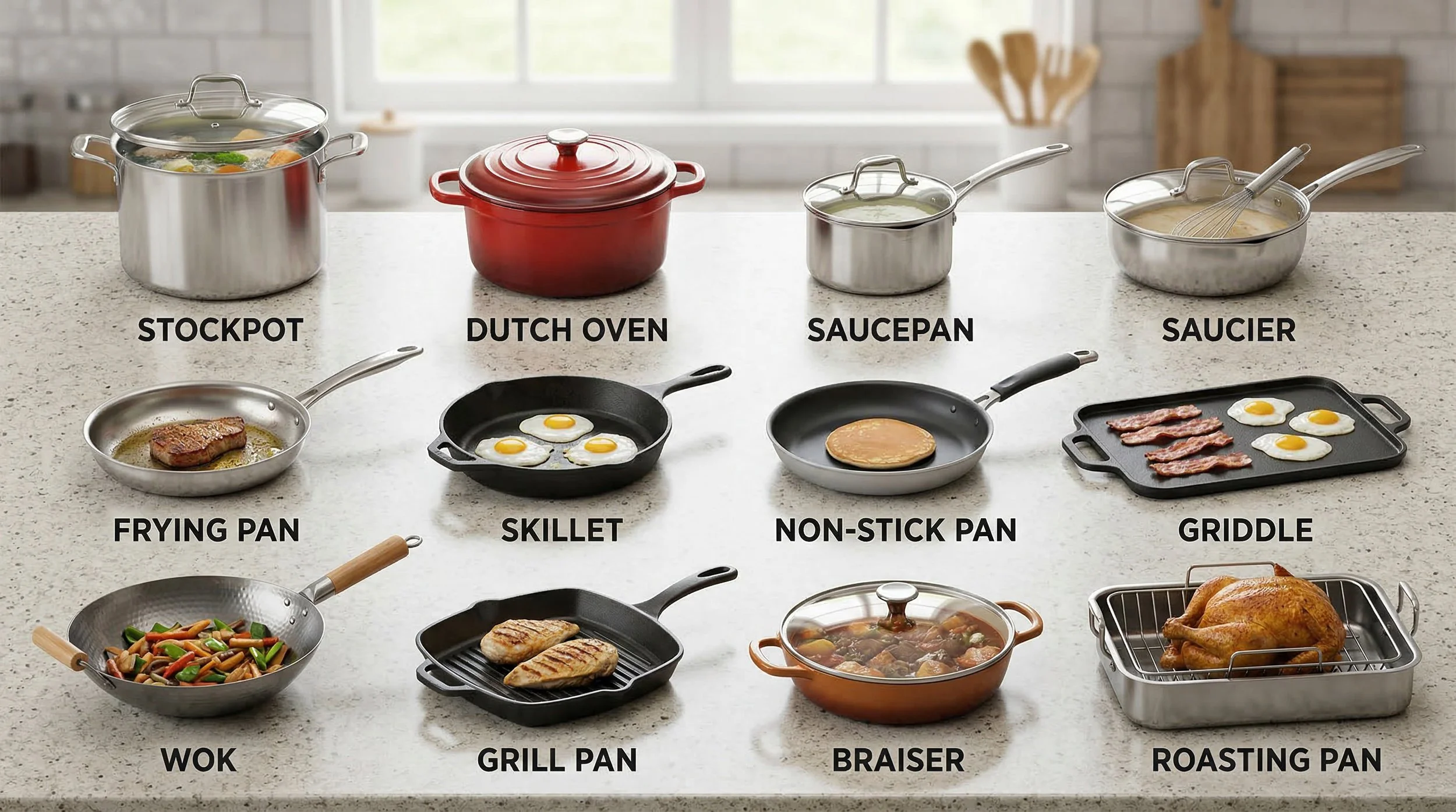
Pots, Pans, and Cookware — The Complete Kitchen Guide
Choosing the right cookware is one of the most important decisions you'll make in the kitchen. The wrong pan at the wrong moment can mean unevenly cooked food, burnt sauces, and unnecessary frustration. The right one makes cooking feel effortless. Here's a complete guide to everything you need to know.
The Stockpot
The stockpot is the largest piece of cookware in the kitchen — a tall, deep pot designed to hold large volumes of liquid. It's built for long, slow cooking where you need plenty of room for ingredients to move and liquid to circulate freely.
Best used for: Making stocks and broths, cooking pasta in large quantities, boiling whole lobsters or crabs, making soups, stews, and chilis for a crowd.
Materials: Stainless steel is the most practical choice for most kitchens — durable, easy to clean, and non-reactive with acidic ingredients.
Chef's tip: A good stockpot doesn't need to be expensive — what matters most is size and a heavy enough base to prevent scorching. Always start your stock with cold water for a cleaner, clearer result.
The Dutch Oven
The Dutch oven is a heavy, lidded pot designed for slow, gentle cooking both on the hob and in the oven. Made from cast iron or enamelled cast iron, it retains heat exceptionally well and distributes it evenly, making it perfect for dishes that need time and patience to develop deep, rich flavour.
Best used for: Braised meats, stews, casseroles, slow-cooked lamb and beef, hearty soups, and even bread baking.
Materials: Enamelled cast iron — brands like Le Creuset and Staub are the gold standard — is the most versatile and easiest to maintain. Plain cast iron is equally effective but requires seasoning and more careful maintenance.
Chef's tip: Always brown your meat directly in the Dutch oven on the hob before adding liquid and transferring to the oven. That initial sear builds layers of flavour that slow cooking alone simply cannot achieve.
The Saucepan
The saucepan is a kitchen essential with deep, straight sides and a single long handle. It's designed primarily for cooking liquids — from a simple béchamel to boiling eggs, cooking rice, or heating stocks and soups. Available in a range of sizes, it's worth having at least two — a small one for sauces and a larger one for grains and soups.
Best used for: Making sauces, boiling eggs, cooking rice and grains, heating soups, making custards and curds, and reducing stocks.
Materials: Stainless steel with an aluminium or copper core offers the best combination of durability and even heat distribution.
Chef's tip: Always match your saucepan size to the quantity you're cooking. A large sauce in a small pan risks boiling over; a small sauce in a large pan will reduce too quickly and may burn.
The Saucier
The saucier is the saucepan's more refined cousin — similar in size but with curved, sloping sides rather than straight ones. Those curved sides allow a whisk to reach every corner of the pan, making it the preferred tool for any sauce that requires constant stirring or whisking. It's a staple in professional kitchens and one of the most underrated pieces of cookware for the home cook.
Best used for: Hollandaise, béchamel, custards, risotto, curds, and any sauce that requires constant attention and movement.
Materials: Stainless steel with a copper or aluminium core is ideal — you need responsive, even heat for delicate sauces that can curdle or burn easily.
Chef's tip: The curved base of a saucier means there are no corners for sauce to hide in and catch — everything stays in motion. If you make a lot of sauces from scratch, a saucier will quickly become one of your most reached-for pieces of cookware.
The Frying Pan
The frying pan is the most used piece of cookware in any kitchen. Flat-bottomed with low, sloping sides, it's designed for high-heat cooking where you want moisture to evaporate quickly — searing, frying, sautéing, and browning. A good frying pan in the right size is something you'll reach for every single day.
Best used for: Searing meat, frying eggs, sautéing vegetables, making pan sauces, pan-frying fish, and cooking omelettes.
Materials: Stainless steel gives excellent browning and durability. Carbon steel is the professional chef's favourite — lighter than cast iron with similar performance and a natural non-stick surface once seasoned.
Chef's tip: Always preheat your frying pan before adding oil or food. A properly heated pan prevents sticking and gives you a far better sear. If a drop of water flicked into the pan dances and evaporates immediately, it's ready.
The Skillet
Often used interchangeably with the frying pan, the skillet is typically made from cast iron and is heavier and thicker. That extra mass means it takes longer to heat up but retains heat far more intensely — making it the go-to choice for dishes where you need sustained, powerful heat.
Best used for: Searing steaks, frying eggs, cornbread, frittatas, pan pizzas, and any dish that starts on the hob and finishes in the oven.
Materials: Cast iron is the defining material of the skillet. It's virtually indestructible, improves with age and use, and can go from hob to oven to table seamlessly.
Chef's tip: Never wash a cast iron skillet with soap — it strips the seasoning. Instead, wipe it clean while still warm, dry it thoroughly, and rub with a thin layer of oil before storing.
The Non-Stick Pan
The non-stick pan is the most accessible and beginner-friendly piece of cookware in the kitchen. Its coating prevents food from sticking without the need for seasoning or large amounts of fat, making it ideal for delicate cooking tasks where sticking is the enemy.
Best used for: Eggs in every form, pancakes, crêpes, delicate fish fillets, and reheating leftovers.
Materials: Most non-stick pans use a PTFE-based coating — commonly known by the brand name Teflon. Ceramic non-stick is a popular alternative, though it tends to lose its non-stick properties faster.
Chef's tip: Never use metal utensils on a non-stick pan — always use silicone, wood, or plastic. Avoid very high heat, as it degrades the coating over time. Replace your non-stick pan when the coating begins to peel or scratch — a damaged non-stick surface is not something you want in your food.
The Griddle
The griddle is a large, flat cooking surface — either a standalone pan or a double-burner plate — designed to cook multiple items at once over consistent, even heat. Unlike a grill pan, it has no raised ridges, giving food full contact with the cooking surface.
Best used for: Bacon, eggs, sausages, pancakes, French toast, quesadillas, and breakfast cooking in general.
Materials: Cast iron griddles offer the best heat retention and develop a natural non-stick surface over time. Non-stick griddles are easier to maintain but can't handle as high a heat.
Chef's tip: A griddle is at its best when it's evenly preheated across the entire surface. Give it time to come up to temperature fully before you start cooking — this ensures everything cooks at the same rate regardless of where it sits on the pan.
The Wok
The wok is the cornerstone of Asian cooking and one of the most efficient and versatile pieces of cookware ever designed. Its deep, rounded shape and thin walls allow it to heat up almost instantly and reach extremely high temperatures — essential for authentic stir-frying where speed and intense heat are everything.
Best used for: Stir-frying, deep-frying, steaming, smoking, and tossing noodles and fried rice.
Materials: Carbon steel is the traditional and preferred choice — it heats up fast, responds quickly to temperature changes, and develops a natural non-stick seasoning over time.
Chef's tip: The biggest challenge with a wok at home is heat. Most domestic hobs don't get hot enough for true wok cooking. To compensate, cook in small batches, make sure your ingredients are completely dry before they hit the wok, and never overcrowd the pan.
The Grill Pan
The grill pan is a heavy, ridged pan designed to replicate the results of an outdoor grill indoors. The raised ridges create those distinctive char marks while allowing fat to drain away from the food below, making it a leaner cooking option for meats and vegetables.
Best used for: Grilling steaks, chicken breasts, fish fillets, halloumi, courgettes, peppers, and toasted sandwiches.
Materials: Cast iron is the best choice — it holds intense heat evenly and gives you authentic grill marks and a proper sear.
Chef's tip: Always preheat your grill pan for at least five minutes before cooking — it needs to be genuinely hot to sear properly rather than steam. Never oil the pan itself; instead, lightly brush oil directly onto the food. Cook in a well-ventilated kitchen — grill pans produce significant smoke at high heat.
The Braiser
The braiser sits between a frying pan and a Dutch oven — wide and shallow with a tight-fitting lid. That combination of a large cooking surface and a sealed environment makes it ideal for dishes that need an initial sear followed by slow, moist cooking. It's one of the most versatile and practical pieces of cookware you can own.
Best used for: Braised chicken thighs, short ribs, lamb shanks, pork belly, and any dish that benefits from browning first and slow cooking second.
Materials: Enamelled cast iron is the gold standard for a braiser — it goes from hob to oven with ease and cleans up beautifully. Stainless steel braisers are a lighter, more affordable alternative.
Chef's tip: The wide base of a braiser means you can sear more food at once without overcrowding — crucial for building proper colour and flavour before the lid goes on. Don't rush that initial browning step; it's where most of the flavour is built.
The Roasting Pan
The roasting pan is a wide, shallow pan designed specifically for oven cooking. Its low sides allow hot air to circulate freely around the food, promoting browning and caramelisation across the entire surface. Most roasting pans come with a rack that lifts the food off the base, allowing heat to reach underneath as well.
Best used for: Roasting whole chickens and joints of meat, roasted vegetables, making pan gravies, and sheet-pan dinners.
Materials: Stainless steel and hard-anodised aluminium are the most practical choices — they conduct heat well, are easy to deglaze for pan sauces, and are straightforward to clean.
Chef's tip: Never overcrowd your roasting pan. Food needs space around it to roast properly — if pieces are touching, they'll steam rather than roast and you'll lose that beautiful caramelisation. Always rest your meat in the roasting pan after cooking and use the resting juices as the base for your gravy.
Great cookware doesn't have to mean expensive cookware — but it does mean choosing wisely, caring for what you have, and understanding what each piece is designed to do. The right pan at the right moment is one of the quiet pleasures of cooking well.