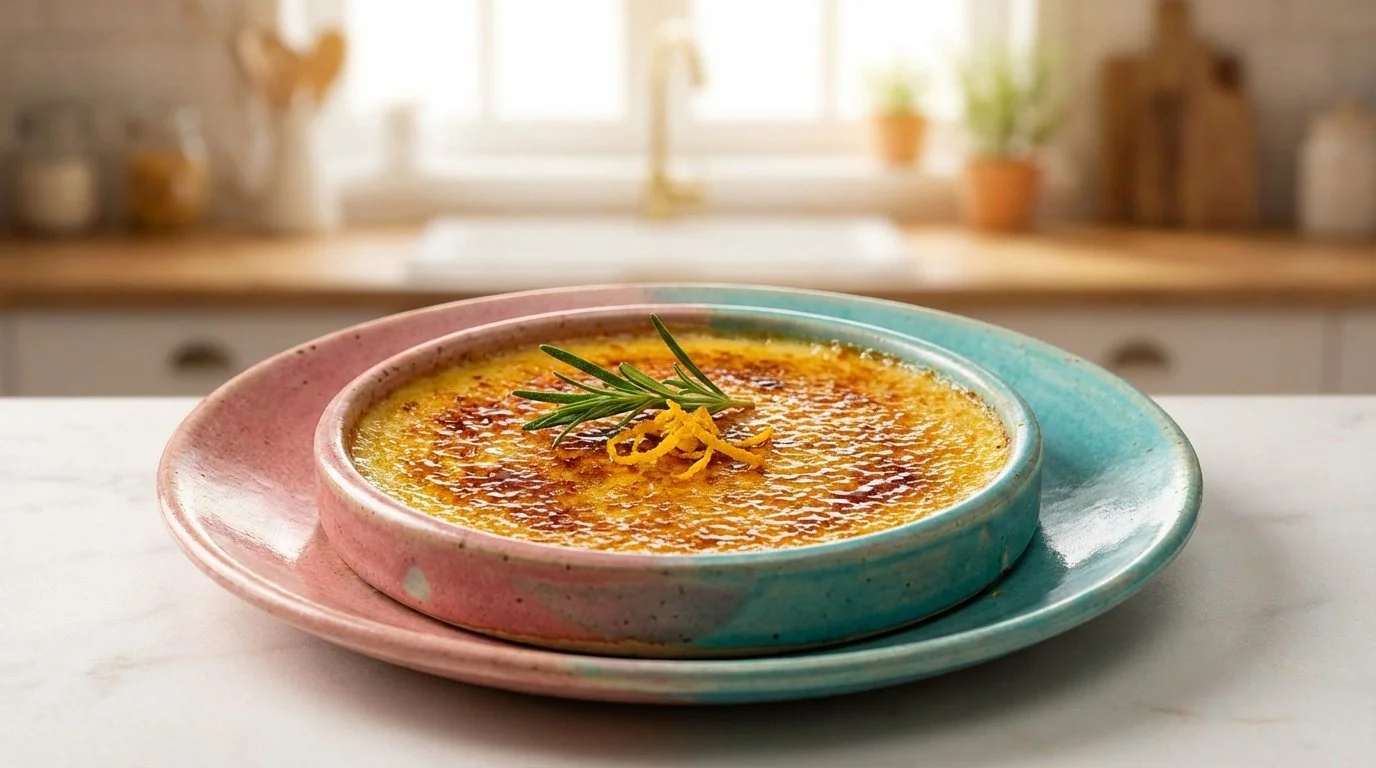
THE BEST CREMA CATALANA RECIPE
⏲ Prep time ⏲ Cooking time Difficulty level Portions
10 min Cook time: 12 - 15 min ★★★☆☆ 6
Chill time: 2 - 3 hours
Ingredients
Custard
• Whole milk — 900 g
• Lemon peel (wide strips, no pith) — 6 g
• Orange peel — 4 g
• Cinnamon stick — 1 (≈ 5 g)
• Egg yolks — 6 large (≈ 110 g)
• Caster sugar — 150 g
• Cornflour (cornstarch) — 35 g
• Vanilla extract (optional but lovely) — 3 g
Caramel Topping
• Caster sugar — 60–80 g (for brûléeing)
Cooking instructions
1. Infuse the milk
Heat milk with lemon peel, orange peel, and cinnamon stick until steaming.
Turn off heat, cover, and infuse 10 minutes.
2. Make the custard
Whisk yolks, sugar, and cornflour until smooth.
Strain the warm milk and slowly whisk it into the yolk mixture.
Return everything to the pan and cook over medium heat, stirring constantly.
When it thickens to a pudding consistency (about 82–84°C), remove from heat.
Stir in vanilla if using.
3. Chill
Pour into 6 shallow ramekins.
Cover the surface with cling film to prevent skin formation.
Chill 2–3 hours until set.
4. Caramelise
Sprinkle each portion with a thin, even layer of sugar.
Torch until crisp and amber.
Serve immediately so the top stays glassy.
Chef ’s Notes
Crema Catalana is all about fragrance and texture. The citrus peel and cinnamon must infuse the milk long enough to perfume it, but not so long that the flavours become bitter. Cornflour is what gives the custard its characteristic lightness—use enough to thicken, but not so much that it becomes pasty. Constant stirring is essential; the custard thickens suddenly, and removing it from the heat at the right moment keeps it silky. Unlike crème brûlée, this dessert is never baked, so the stovetop thickening is the heart of the technique. For the caramel, a thin layer of sugar gives the best crack; too much creates a thick, chewy top instead of a crisp one. A touch of orange peel is traditional and adds a beautiful floral note that lifts the whole dessert.