
THE SCIENCE OF COOKING

Cooking is often described as an art — and it is. But beneath every great dish lies a world of chemistry, physics, and biology that most cooks never fully explore. Understanding the science behind what happens in your pan, your oven, and on your plate does not make cooking less creative. It makes you a better, more confident, and more instinctive cook. Whether you are a home cook trying to understand why your sauce keeps breaking or a professional looking to deepen your knowledge, the science of cooking gives you the tools to solve problems, improve results, and truly understand your craft.
The Chemistry Behind Everyday Cooking Reactions
Every time you cook, you are a chemist — whether you realise it or not. The browning of a steak, the rising of a cake, the souring of a sauce — these are all the results of chemical reactions happening in real time.
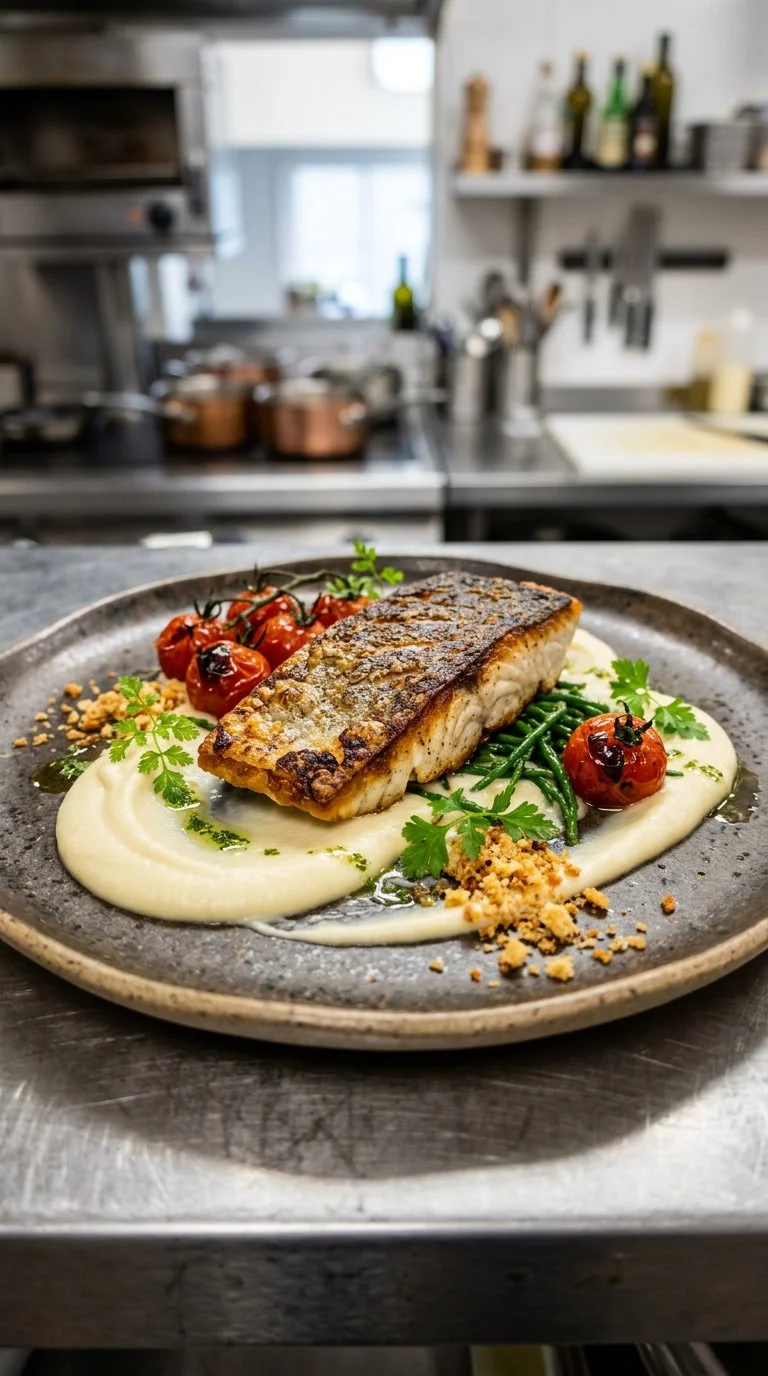
The most important of these reactions is the Maillard Reaction. Named after French chemist Louis-Camille Maillard, this is the reaction responsible for the golden-brown colour and rich, complex flavour that develops when food is exposed to high heat. It occurs when amino acids and reducing sugars in food react together at temperatures above approximately 140°C. This is why a seared steak tastes so different from a boiled one, why toasted bread has more flavour than untoasted bread, and why roasted coffee smells the way it does. The Maillard reaction does not just brown food — it creates hundreds of new flavour compounds that simply do not exist in the raw ingredient.
Caramelisation is a separate but equally important reaction. Unlike the Maillard reaction, caramelisation involves only sugars — no proteins required. When sugars are heated beyond their melting point, they break down and form new compounds with complex, slightly bitter, deeply sweet flavour profiles. This is what gives caramel its distinctive taste, why onions become sweet and golden when cooked slowly, and why the edges of a roasted vegetable taste richer than the centre.
Gelatinisation is what happens when starch granules absorb water and swell when heated, thickening sauces, soups, and gravies. This is the science behind why a béchamel thickens, why cornflour works as a sauce thickener, and why pasta becomes tender when boiled. Understanding gelatinisation helps you control the consistency of your dishes with confidence.
Denaturation refers to what happens to proteins when they are exposed to heat, acid, or mechanical action. Proteins are made up of long chains of amino acids folded into specific shapes. When heat or acid is applied, these chains unfold and change structure — which is why egg whites turn from clear and liquid to white and solid when cooked, why meat firms up on the grill, and why fish turns opaque in the pan. Controlling denaturation is the key to cooking proteins perfectly every time.
How Heat Transforms the Structure of Food
Heat is the most powerful tool in any kitchen. But understanding what it actually does to food — at a structural level — allows you to use it with far greater precision and control.
When heat is applied to meat, the muscle fibres begin to contract and the proteins denature. At around 55°C, the meat begins to firm up. By 70°C, most of the moisture has been squeezed from the muscle fibres, which is why overcooked meat is dry and tough. However, when collagen — the connective tissue found in tougher cuts — is cooked slowly at low temperatures for extended periods, it breaks down into gelatine, which gives slow-cooked dishes their rich, glossy, unctuous texture. This is the science behind why a cheap braising cut cooked for three hours is more tender and flavourful than an expensive steak cooked for ten minutes at the wrong temperature.
When heat is applied to vegetables, cell walls begin to soften as the pectin that holds them together breaks down. This is why a raw carrot is firm and crunchy but a roasted or boiled carrot becomes tender. Heat also destroys certain enzymes in vegetables that cause them to lose colour — which is why blanching green vegetables in boiling water and immediately refreshing them in ice water preserves their vibrant green colour. Overcooking, on the other hand, breaks down chlorophyll and turns green vegetables grey and dull.
When heat is applied to eggs, the proteins — primarily albumin in the white and various proteins in the yolk — begin to denature and coagulate at different temperatures. Egg whites begin to set at around 60°C and are fully set by 65°C. Yolks begin to thicken at around 65°C and set fully at around 70°C. This is why a perfectly poached egg has a set white and a runny yolk — it requires precise temperature control to denature the white fully without taking the yolk past its setting point. Understanding egg protein behaviour is the foundation of countless classical and modern cooking techniques.
When heat is applied to baked goods, a complex series of transformations takes place simultaneously. Yeast produces carbon dioxide that makes dough rise. Gluten networks — formed when flour proteins glutenin and gliadin combine with water and are worked mechanically — trap these gas bubbles and give bread its structure. In the oven, the gas expands further, the starch gelatinises, the proteins set, and the Maillard reaction creates the golden crust. Understanding this sequence is the key to troubleshooting baking problems and consistently producing great results.
Why Certain Ingredients Behave the Way They Do
Great cooks do not just follow recipes — they understand their ingredients. Knowing why an ingredient behaves in a particular way allows you to predict, control, and adapt.
Salt is the most important ingredient in any kitchen, and not just for its flavour. Salt draws moisture out of ingredients through osmosis, which is why salting vegetables before cooking draws out excess water and why dry-brining meat before roasting results in a better crust. Salt also suppresses bitterness, enhances sweetness, and amplifies the overall flavour of a dish. In bread making, salt controls the fermentation rate of yeast and strengthens gluten structure. In cheese making, it draws out whey and inhibits bacterial growth. Salt is not just a seasoning — it is a functional ingredient.
Acids — such as lemon juice, vinegar, and wine — play a crucial role in cooking. Acid denatures proteins, which is why citrus juice can effectively "cook" fish in a ceviche without any heat. Acid brightens flavours, balances richness, and prevents browning in cut fruits and vegetables by inhibiting the enzymes responsible for oxidation. In baking, acid reacts with bicarbonate of soda to produce carbon dioxide, which causes batters and doughs to rise. Understanding acid allows you to balance flavour in a dish with precision and intention.
Fat is a carrier of flavour — many of the aromatic compounds in herbs, spices, and other ingredients are fat-soluble, meaning they are only released and fully expressed in the presence of fat. Fat also transfers heat efficiently, which is why sautéing in butter or oil produces browning and flavour development that boiling in water cannot. Different fats have different smoke points — the temperature at which they begin to break down and produce harmful compounds — which determines which fat is appropriate for which cooking method. Butter has a low smoke point and is ideal for gentle cooking and finishing, while refined oils such as sunflower or groundnut oil have high smoke points suitable for high-heat frying.
Sugar does far more than sweeten. It retains moisture in baked goods, keeping them tender and extending shelf life. It feeds yeast in fermented doughs, contributing to rise and flavour development. It caramelises under heat to create colour and complexity. It balances acidity and bitterness in sauces and dressings. And in high concentrations, it preserves foods by drawing out water and inhibiting microbial growth — which is the principle behind jams, preserves, and candied fruits.
Understanding Emulsification and Why It Matters
Oil and water do not mix — at least, not without help. This is one of the most fundamental principles in cooking, and understanding it unlocks some of the most important techniques in the kitchen.
An emulsion is a stable mixture of two liquids that would not normally combine — typically an oil and a water-based liquid. There are two types of emulsion relevant to cooking. A temporary emulsion — such as a simple vinaigrette — is created by vigorously shaking or whisking oil and acid together. The two liquids combine briefly but will separate again if left to stand. A permanent emulsion — such as mayonnaise or hollandaise sauce — is stabilised by an emulsifier, which is a molecule with one end that is attracted to water and one end that is attracted to fat. The emulsifier surrounds the droplets of one liquid and suspends them in the other, preventing separation.
The most important natural emulsifier in cooking is lecithin, found in egg yolks. This is why egg yolk is the key ingredient in mayonnaise, hollandaise, and béarnaise sauce. When whisked with oil and acid, the lecithin in the yolk stabilises the emulsion and prevents it from breaking.
Mayonnaise is a classic example of a permanent oil-in-water emulsion. The egg yolk provides the lecithin, the acid — typically vinegar or lemon juice — provides the water phase, and the oil is added slowly while whisking vigorously to allow the emulsifier to do its work. Adding the oil too quickly overwhelms the emulsifier and causes the sauce to split. Understanding this process means that if your mayonnaise breaks, you know exactly why and exactly how to fix it.
Hollandaise sauce follows the same emulsification principle but introduces heat. The egg yolks are gently cooked over a bain-marie — a bowl set over simmering water — while being whisked continuously to both cook the yolks slightly and incorporate air. Clarified butter is then added slowly, just as with mayonnaise. The risk here is temperature — too much heat will scramble the eggs before the emulsion is formed, too little and the emulsion will not hold. Knowing the science means knowing exactly where the boundaries are.
Butter sauces — such as beurre blanc — are another form of emulsion. Here, small pieces of cold butter are whisked into a reduction of wine and shallots. The water content of the butter emulsifies with the reduction to form a rich, velvety sauce. The key is temperature — if the sauce gets too hot, the emulsion breaks and the butter separates into an oily pool. If it gets too cold, the butter solidifies. The ideal serving temperature for a butter sauce is a precise narrow range, and understanding the science allows you to maintain it.
Emulsification is not limited to classical French sauces. It is the principle behind salad dressings, certain pasta sauces, chocolate ganache, ice cream, and many other preparations. Every time you create a smooth, stable mixture of fat and water, you are emulsifying — and understanding why it works gives you the power to do it consistently, troubleshoot when it goes wrong, and apply the principle creatively across your cooking.

Why the Science of Cooking Matters
A recipe tells you what to do. Science tells you why. And when you understand why, you are no longer dependent on a recipe — you become a cook who can adapt, improvise, troubleshoot, and create. The science of cooking is not an academic exercise reserved for food technologists or culinary researchers. It is practical, applicable knowledge that makes a real difference every single time you step into the kitchen. Understanding it is one of the most valuable investments you can make in your cooking.