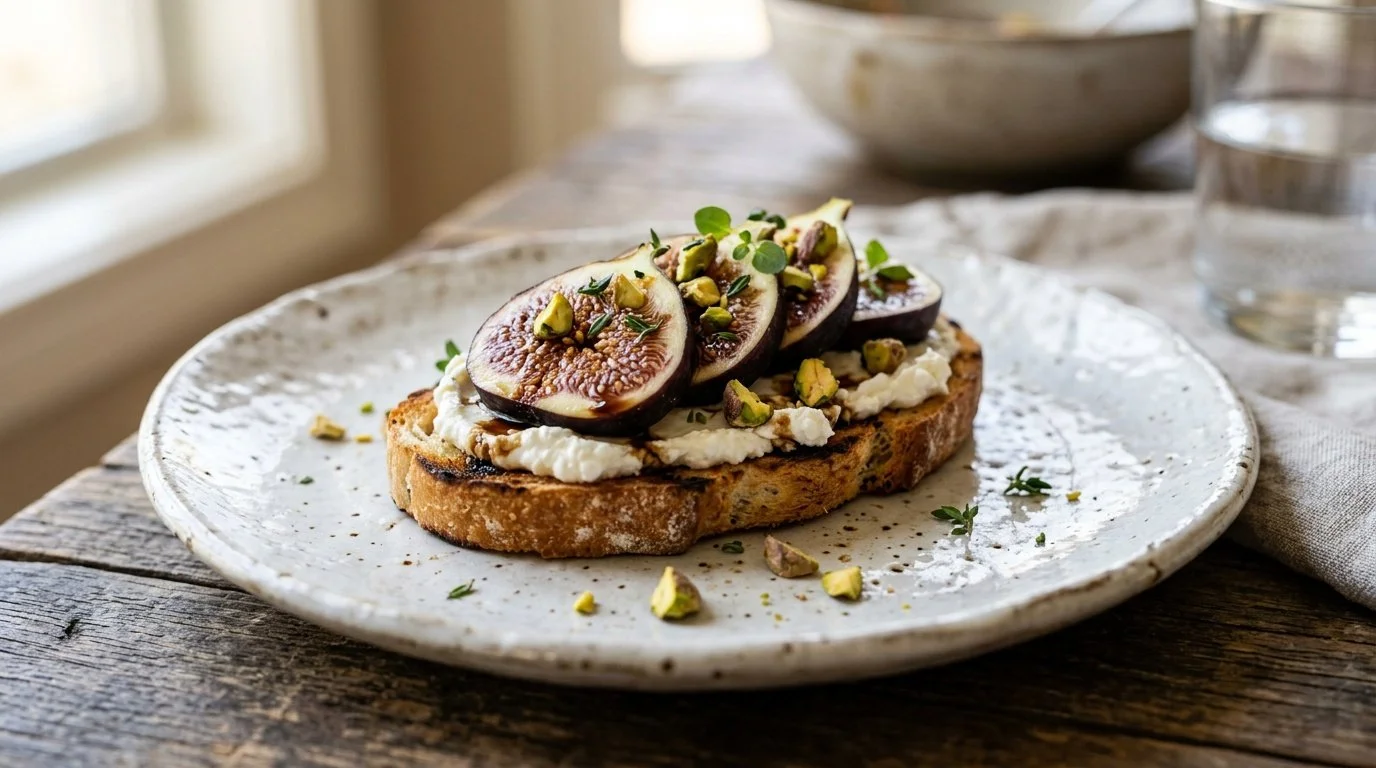
FIG PISTACHIO GOATS CHEESE CROSTINI
⏲ Prep time ⏲ Cooking time Difficulty level Portions
15 min 8 - 10 min (to toast the crostini) ★☆☆☆☆ 4
Ingredients
Crostini Base
• Baguette — 1 medium (≈ 250 g), sliced into 16 pieces
• Olive oil — 25 g
• Salt — 1 g
Topping
• Soft goat’s cheese (chèvre) — 180 g
• Cream cheese (to soften texture) — 60 g
• Honey — 12 g
• Black pepper — 1 g
Figs & Nuts
• Fresh figs, sliced — 6–8 figs (≈ 300 g)
• Pistachios, lightly toasted and chopped — 50 g
• Extra honey for drizzling — 10 g
• Fresh thyme leaves — 2 g (optional but excellent)
Cooking instructions
1. Make the crostini
Preheat oven to 190°C.
Brush baguette slices with olive oil and sprinkle lightly with salt.
Bake 8–10 minutes until crisp and lightly golden. Cool slightly.
2. Prepare the cheese spread
Mix goat’s cheese, cream cheese, honey, and black pepper until smooth.
Spread generously on each warm crostini.
3. Assemble
Top each crostini with fig slices.
Sprinkle with chopped pistachios.
Drizzle lightly with honey and finish with thyme leaves.
Chef ’s Notes
This crostini works because of contrast: crisp bread, creamy cheese, soft figs, and crunchy pistachios. Softening the goat’s cheese with a little cream cheese makes it easier to spread and prevents it from overpowering the figs. Toasting the pistachios briefly intensifies their flavour and adds warmth that complements the honey. Fresh figs are ideal, but if they’re out of season, lightly warmed dried figs or fig jam can stand in. A tiny drizzle of honey ties everything together, but keep it minimal—too much sweetness will drown out the goat’s cheese. Thyme adds a subtle herbal note that keeps the bite from feeling too rich.