RED WINE BRAISED LAMB SHANKS
⏲ Prep time ⏲ Cooking time Difficulty level Portions
20 min 2.5 - 3 hours ★★★☆☆ 8
Ingredients
Lamb
• Lamb shanks — 8 small or 6 large (≈ 2.8–3.2 kg total)
• Salt — 16 g
• Black pepper — 4 g
• Olive oil — 40 g
Braising Base
• Onion, diced — 300 g
• Carrot, diced — 200 g
• Celery, diced — 150 g
• Garlic, minced — 12 g
• Tomato paste — 40 g
• Flour — 20 g (for thickening)
• Red wine — 750 g (one bottle)
• Beef or lamb stock — 800 g
• Chopped tomatoes — 200 g
Aromatics
• Bay leaves — 2
• Fresh thyme — 6 g
• Rosemary — 4 g
• Lemon zest — 2 g (added at the end)
Finish
• Parsley, chopped — 10 g
Cooking instructions
1. Brown the lamb
Pat shanks dry and season with salt and pepper.
Heat oil in a heavy pot and brown shanks on all sides (10–12 minutes).
Remove and set aside.
2. Build the flavour base
Add onion, carrot, and celery; cook 8 minutes until softened.
Add garlic and tomato paste; cook 1 minute.
Sprinkle flour and stir to coat.
Pour in red wine, scraping up browned bits; reduce by one‑third.
3. Braise
Add stock, tomatoes, bay, thyme, and rosemary.
Return shanks to the pot, partially submerged.
Cover and cook at 160°C for 2.5–3 hours, turning halfway, until the meat is falling off the bone.
4. Finish the sauce
Remove shanks and reduce the sauce uncovered if needed.
Add lemon zest and parsley.
Return shanks to glaze lightly before serving.
Chef ’s Notes
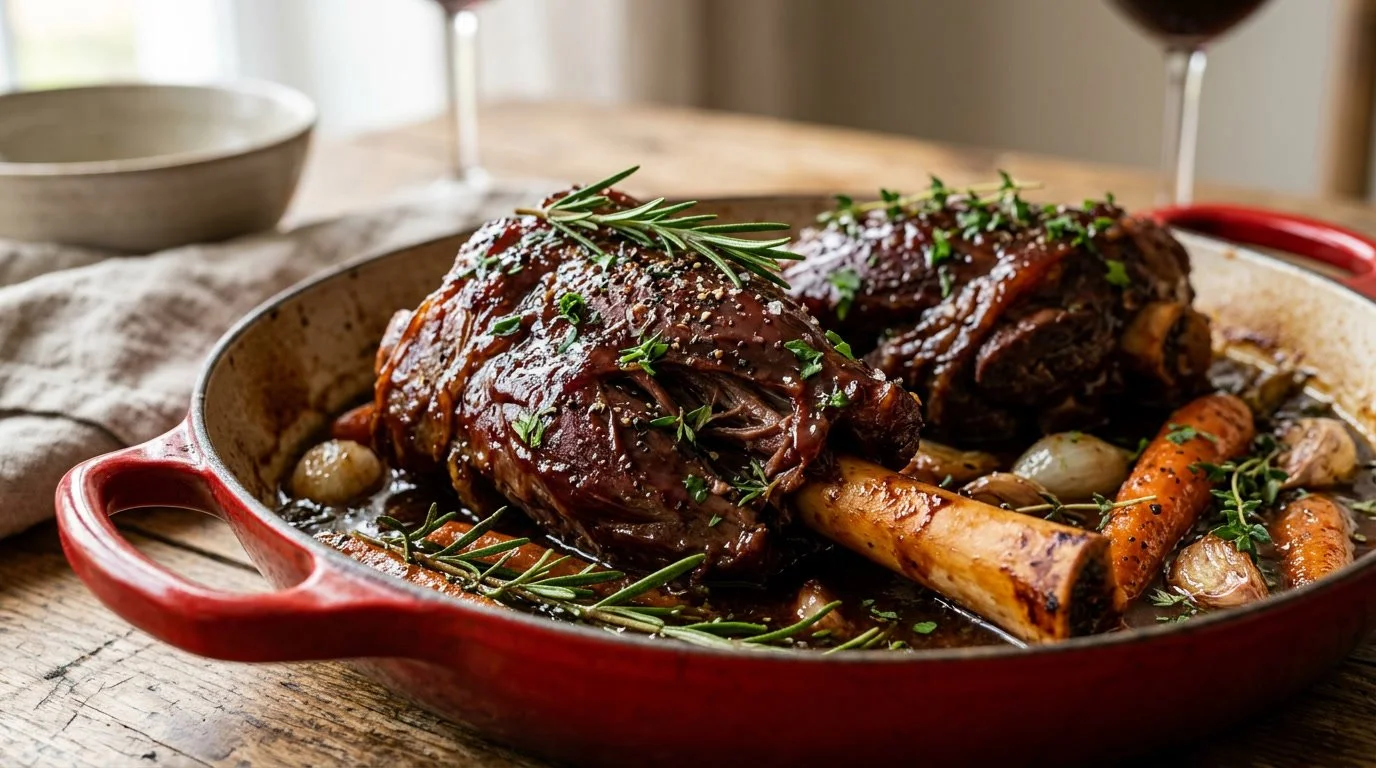
The success of this dish comes from patient layering. Browning the shanks deeply is non‑negotiable—it builds the foundation of the sauce. Reducing the wine before adding stock prevents the finished sauce from tasting sharp or thin. Keeping the shanks only partially submerged allows the exposed tops to caramelise while the submerged portions braise. Low, steady heat is essential; boiling will toughen the meat. Adding lemon zest at the end brightens the richness without making the dish citrusy. If the sauce tastes slightly bitter (common with young red wines), a teaspoon of honey balances it without becoming sweet. Serving with mashed potatoes, polenta, or buttered couscous lets the sauce shine.